Materials · Labels · Better questions
What Organic Bedding Certifications Tell You About Naturepedic
A label on a pillow or mattress is a small signpost in a long supply chain. It may tell you how a fiber was grown, which chemical inputs are restricted, or whether a facility has been independently assessed. It rarely tells the whole story. Naturepedic offers a useful point of reference for learning how to read organic bedding claims—while the details of any certification still need to be checked against the specific product and its components.
Published November 9, 2026
A label is a map, not the landscape
In a finished bed, several different materials meet: a mattress core, batting, fabric, thread, elastic, fasteners and, sometimes, a removable cover. Each may have a different origin and a different route through processing. A phrase such as “organic bedding” can sound like a single, complete description, but certification generally applies within a defined scope. It may cover a particular fiber, a finished textile, a processing facility or a manufacturing chain—not necessarily every part of every item a company sells.
That distinction matters when looking at Naturepedic, a bedding brand commonly associated with organic materials and third-party standards. The name can serve as a starting point for understanding certification language, not as a substitute for reading an individual product’s disclosures. A company may hold certifications or offer certified materials, while particular products, components, sizes or production runs differ. The product page, label and current certificate are the places to confirm the particulars.
For shoppers, the useful question is not simply, “Is this certified?” It is: “What exactly is certified, to which standard, by whom, and for which part of this item?” That question turns a broad marketing impression into a practical investigation.
What organic means in textile language
“Organic” most often describes how an agricultural raw material was produced under a particular standard. In textiles, cotton is a familiar example. Wool may also be certified under standards that address organic production and processing. But the word alone does not reveal the whole path from farm to bed. Fibers can be cleaned, carded, spun, dyed, woven, quilted and assembled; each stage introduces separate questions about inputs, handling and environmental controls.
Textile certifications help make some of those steps more visible. Depending on the standard, requirements may address the origin of fibers, prohibited substances, wastewater, chemical management, chain-of-custody records, worker protections or product testing. The requirements differ. A certification focused on organic fiber production does not automatically certify the finished article for every chemical, performance or social criterion a shopper might care about.
This is why “organic,” “natural,” “non-toxic” and “eco-friendly” should not be treated as interchangeable terms. “Natural” can describe a material’s perceived origin without specifying a verified production system. “Eco-friendly” is broad and needs a clear basis. “Organic” can have a precise meaning when tied to a named standard and a valid scope. The more specific the claim, the easier it is to evaluate.
GOTS: a standard that follows textile processing
The Global Organic Textile Standard, usually shortened to GOTS, is one of the best-known certifications in organic textiles. It addresses more than the agricultural origin of a fiber. Its framework includes requirements for processing and manufacturing, chemical inputs, environmental management and social criteria across relevant stages of the supply chain. Certified products must meet the standard’s applicable requirements, and certified entities are subject to independent assessment.
GOTS comes in different label grades, commonly described as “organic” and “made with organic materials.” Those grades indicate different minimum organic-fiber contents under the standard. They are not interchangeable, and a shopper should check the precise grade rather than relying on a general mention of GOTS. The label also does not mean that every imaginable substance is absent, nor does it settle every question about durability, comfort or the full environmental footprint of a product.
For bedding, the scope is crucial. A GOTS claim could apply to a textile or a product whose relevant textile components meet the standard, but it is still worth confirming which components are covered. Is the certification stated for the outer fabric, the wool fill, or the completed article? Does it apply to the whole item or only specified materials? If the product page gives a certificate number or a link to a current certification record, use it to check the claim and its validity.
GOTS is therefore valuable not because it answers every question, but because it sets a defined framework for several important parts of textile production. Its meaning is strongest when the seller is precise about product identity, certification grade and scope.
GOLS and the material-specific question
The Global Organic Latex Standard, or GOLS, is focused on organic latex. In bedding, that makes it relevant to latex cores and latex components, not automatically to wool batting, cotton fabric, zippers or an entire mattress. A product combining latex, wool and cotton may therefore involve more than one material standard—or components that are described separately.
That layered construction is easy to overlook. One component can be certified while another is not, and that is not necessarily a defect or a misleading claim if the disclosure is clear. The key is to understand which portion the certification describes. A label that says “GOLS-certified latex” should not be read as “every material and process in this mattress is GOLS-certified.”
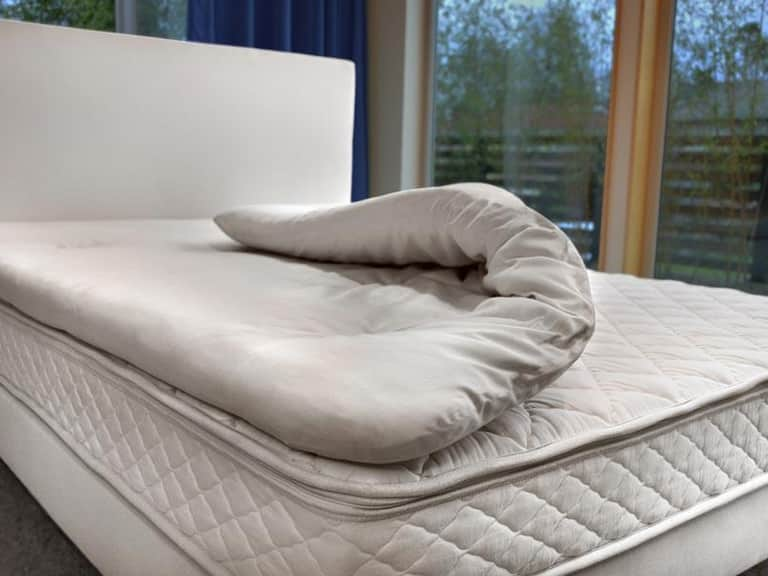
A useful example from the wool bedding category is the Organic Latex Topper - 3". Its product information identifies GOLS-certified latex and GOTS-certified wool and cotton. Those are distinct claims relating to different materials. Reading them side by side illustrates why certification language should be attached to the component it actually covers, rather than generalized to the product without qualification.
This example is a guide to interpreting material disclosures, not an endorsement or a substitute for checking current certification records. Standards and certificate status can change, and product descriptions may be updated. Confirm the information that applies to the item and production period you are considering.
What a certification does—and does not—verify
A credible certification can provide evidence that a defined set of requirements has been assessed by an independent organization. Depending on the standard, it may help verify fiber content, regulated production practices, chemical restrictions, processing controls, chain-of-custody documentation or facility conditions. In that sense, certification can replace a vague promise with a more accountable claim.
But no single label should be expected to function as a universal guarantee. Certification does not necessarily establish that a product is better for every sleeper, that it will last longer, that it is locally made, or that its entire life cycle has a lower environmental impact. It may not address the product’s comfort, fit, repairability, packaging, shipping or end-of-life options. Those are separate considerations.
Similarly, terms such as “hypoallergenic” and “chemical-free” deserve careful reading. A standard may restrict specified chemicals or require testing against certain criteria; that is different from proving that a finished product contains nothing a person could react to. Wool, cotton and latex can also affect individuals differently. Anyone with a known allergy or sensitivity should review full material disclosures and consult a qualified health professional where appropriate.
Certification is most useful as one piece of evidence in a larger picture. It can narrow uncertainty, but it cannot eliminate the need for clear product information and sound judgment.
How to read a Naturepedic product page
When researching Naturepedic—or any bedding maker—begin with the exact item rather than the company’s general reputation. Product families can contain different constructions, and a brand-wide statement may not describe every model. Open the page for the specific mattress, topper, pillow or comforter, then look for a material breakdown and certification details.
- Identify the exact product. Note the model name, size and version. Certification claims may vary between products or change as materials and suppliers change.
- Separate the components. Look for the core, batting, cover, textile layers, adhesives, elastic and other added materials. A certification may apply to only one of these.
- Find the standard’s full name. Acronyms are easy to confuse. Check whether the claim refers to GOTS, GOLS or another standard, and learn what that standard covers.
- Check the grade and scope. For textile claims, look for the relevant label grade and whether the certification applies to the material, textile, facility or finished item.
- Look for independent confirmation. A certification body, certificate number or searchable record can help verify that the certificate is current and relevant to the product or manufacturer.
- Read care and limitations. Washing, airing, spot cleaning and replacement guidance affect how a natural material performs and how long it remains useful.
Naturepedic’s role in this discussion is as a familiar example of a bedding company whose materials and certifications invite closer examination. A responsible reading does not assume that every item carries every credential. Instead, it follows the claim down to the product level and asks whether the evidence matches the wording.
The chain of custody behind a small label
Textiles travel through a network of growers, processors, mills, dyers, sewing rooms and assemblers. A certification system must do more than inspect a finished surface if it is to make claims about earlier stages. Chain-of-custody procedures help document how certified materials move through that network and how they remain identifiable as they are processed or combined.
For the shopper, this system is mostly invisible. The label is the visible end of records, audits and defined rules. Yet it is not a reason to stop asking questions. A clear company disclosure should tell readers what the label means in plain language, where certified materials appear, and whether the certification refers to the whole product or particular components.
Country of origin can add another useful layer of context, but it is not itself a certification. A product may use wool from one region, cotton from another and be assembled elsewhere. That information helps describe the supply chain; it does not, on its own, prove organic status or particular environmental and social practices.
Nor does an organic fiber automatically have a smaller footprint in every circumstance. Farming methods, land use, water, processing energy, transport, product longevity and disposal all shape environmental impact. Certifications address defined criteria and can make important improvements measurable, but a complete life-cycle comparison requires broader evidence.
Wool bedding: natural fiber, specific care
Wool offers a distinct set of material qualities. Its crimped fibers trap air, helping create insulation, while the fiber can absorb moisture vapor before it feels wet. In a topper or comforter, wool may contribute a breathable layer and a particular kind of resilience. These are material characteristics, not certification claims. A certified wool product still needs a construction suited to its purpose and care instructions suited to its fill and fabric.
Care can differ markedly from one wool item to another. Some washable wool blends are designed for gentle machine cycles; some quilted toppers are intended for spot cleaning and periodic airing rather than routine washing. Agitation, heat and unsuitable detergents can shrink or felt wool. Always follow the maker’s instructions for the exact item. A certification does not mean that the product is machine washable or maintenance-free.
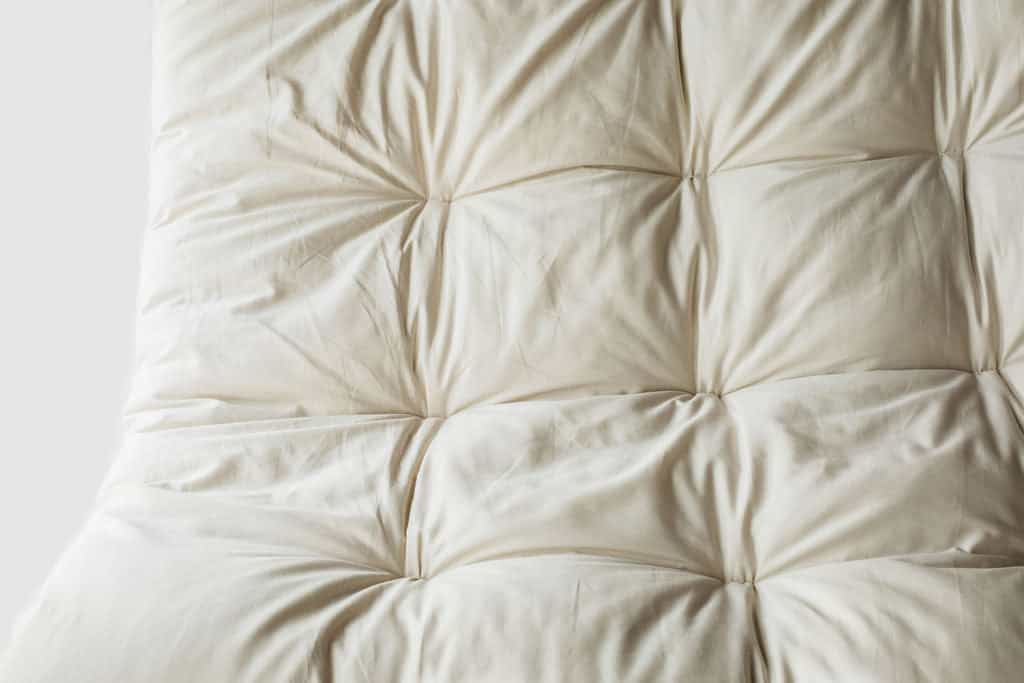
Construction also matters. Quilting and tufting can help keep batting evenly distributed, while a removable cover can reduce the frequency of cleaning. Those details affect everyday use independently of the fiber’s certification. For people comparing bedding, it is sensible to consider materials, construction, fit, care and warranty alongside labels.
Questions worth asking before you decide
Good questions make product descriptions more useful. If a page says “organic,” ask which material is organic and which standard supports the statement. If it says “certified,” ask for the certification name, scope and current verification. If the product combines materials, ask whether each is certified independently or whether the claim applies to the completed textile. If the answer is not available, that absence is information too.
It is also reasonable to ask about non-certified components. A zipper or elastic may not be covered by the same standard as the fabric. The important point is that the product description should not leave readers with a broader impression than the evidence warrants. Precise, component-level explanations build more confidence than a cluster of unexplained seals.
Finally, match certification priorities to personal needs. Some shoppers care most about organic fiber origin; others focus on chemical management, worker conditions, animal welfare, durability or ease of care. Standards can help address parts of these concerns, but no label necessarily covers them all. A thoughtful choice balances the evidence with how the bedding will be used and maintained.
A practical checklist for certification claims
- Write down the exact product and model, not just the brand.
- List its main materials and identify which are natural, synthetic or blended.
- Match each certification to the material or process it actually covers.
- Check the certification grade, certificate holder and current status where records are available.
- Compare the product’s claims with its care instructions, construction details and origin disclosures.
- Keep broader questions—durability, sourcing, comfort and end-of-life options—separate from what a given label verifies.
With that checklist, organic bedding becomes easier to assess without treating certification as either a magic seal or meaningless decoration. The goal is to understand the boundary of each claim.
The clearest signal is specificity
A certification label can open a window onto the production of bedding: the field where a fiber begins, the mill where it is transformed, or the controls that govern a finished textile. But a window frames only part of the view. GOTS and GOLS, for example, address different materials and processes; neither should be stretched to cover components beyond its stated scope.
Naturepedic provides a useful context for practicing this kind of close reading. The lesson applies well beyond one brand: check the exact product, identify the component, understand the standard and verify the claim where possible. When the language is specific and the evidence is accessible, a label can become a meaningful guide to materials and manufacturing—not merely a reassuring word on a tag.
In the end, informed bedding choices are made one layer at a time. A clear certification does not tell the entire story of a bed, but it can help reveal a portion of that story with greater precision.