Wool bedding care and materials
Choosing Wool Comforter Weight for Changing Seasons
A comforter’s warmth is not determined by its label alone. Fill amount, room temperature, sleep habits, construction, and the layers around it all shape how wool bedding feels through the night. Understanding those factors can make it easier to choose a weight that works with the seasons rather than against them.
Published November 26, 2026
In a bedroom, the seasons arrive in small measurements: a radiator clicking on, a window left ajar, a foot slipping from beneath the covers at two in the morning. A comforter sits at the center of these nightly adjustments. It must hold enough warmth to feel reassuring when the room cools, yet allow enough heat and moisture to escape when the sleeper’s body warms beneath it.
Wool is often chosen for this balance. Its fibers can hold still air, which helps provide insulation, and absorb moisture vapor before the fabric necessarily feels damp. Those qualities can contribute to a comfortable bedding microclimate, but they do not make every wool comforter equally warm—or guarantee that one will feel right to every sleeper. Fill weight is a useful starting point, not a complete verdict.
Sleep and Beyond’s lighter and all-season wool comforters offer examples of how different constructions can serve different conditions. Comparing such options means looking beyond a single word on a product description. The room, the sleeper, the cover, the care label, and the way the comforter is made all matter.
What comforter weight really tells you
In bedding, “weight” can refer to several different things. It may describe the total weight of the finished comforter, the amount of fill per unit of area, or simply a manufacturer’s category—lightweight, medium-weight, or all-season. These terms are not always standardized across brands, so direct comparisons can be difficult unless the product details provide actual fill weights and measurements.
Fill weight is the quantity of insulating material inside a comforter. More fill commonly means more material available to trap air, which can make a comforter warmer. But warmth also depends on the fiber, how densely it is arranged, the quilting pattern, the outer fabric, and how well the comforter covers the bed. A heavier fill is not automatically the best choice for a cold sleeper, nor is a lighter one automatically comfortable for someone who sleeps hot.
Wool’s natural structure contributes to its useful insulating and moisture-managing qualities. Even so, the experience of sleeping under wool is personal. Two people in the same room can feel very different beneath the same bedding, especially if their preferred sleepwear, activity levels, health, or temperature sensitivity differ.
When a description gives a fill weight in grams per square metre or ounces per square yard, treat it as a helpful specification rather than a direct warmth rating. It can help compare products made with similar materials and construction, but it does not account for every variable. If the information is missing, look for a clear explanation of intended use and care, and ask the maker how its weight categories are defined.
Lightweight wool for warmer rooms and warmer sleepers
A lightweight comforter may suit a warm climate, a well-heated bedroom, or someone who tends to feel hot under conventional bedding. It can also be a practical choice for transitional weather, when nights are cool enough to call for a cover but not cold enough to justify a substantial winter layer.
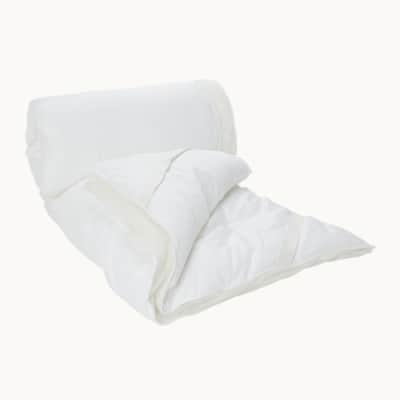
Sleep and Beyond’s myComforter Light is described as a lighter option filled with washable wool and covered in cotton sateen. Its product information identifies it as suitable for warmer seasons or climates and for people seeking a lighter layer. The same description recommends a duvet cover to protect the comforter and notes that washing should not be frequent, because agitation may cause batting to separate within quilted sections.
That care guidance illustrates an important point: “washable” does not mean “wash whenever convenient.” A washable wool comforter may have specific limits on water temperature, cycle, agitation, drying, and detergent. Follow the instructions for the exact item. Wool products vary, and a care method suitable for one construction may damage another.
A lighter comforter can also work as part of a flexible bedding system. A breathable sheet and a removable duvet cover allow small adjustments without changing the comforter itself. When nights become colder, another layer can be added; when the room warms, it can be removed. This modular approach can be more comfortable than asking one thick comforter to perform in every possible condition.
All-season does not mean one perfect temperature
“All-season” suggests versatility, but it should not be read as a promise of identical comfort through every climate, room, and body temperature. The term usually points to a middle ground: a design intended to provide useful warmth across a range of conditions. Whether that range matches a particular household depends on the home and its occupants.
Some all-season comforters use one consistent layer of fill. Others are designed with separate layers that can be combined or separated, or with distinct warmth levels in different sections. Those arrangements offer different kinds of flexibility. A single medium-weight comforter is simple to handle; separate layers can offer more seasonal adjustment, but may require more storage and setup.
Sleep and Beyond’s all-season wool comforter is described as using two quilted comforters that can be joined for colder weather or separated when temperatures rise. Its wool fill and organic cotton sateen shell provide the material basis, while ties at the corners and sides help secure the layers together. This kind of construction lets a sleeper alter the amount of insulation without replacing the entire comforter.
Another approach is a comforter with two different warmth levels across its sides. The All-Natural Dual-Weight Comforter is described as pairing different wool weights on each side, so two sleepers can choose distinct warmth levels while sharing one comforter. It is made with premium eco wool and a GOTS-certified organic cotton sateen cover, with hand-tufting and perimeter stitching to help keep the batting in place. Corner ties are included for securing it inside a duvet cover.
These designs solve different problems. A separable system is about changing the total insulation between seasons. A dual-weight comforter is about accommodating different warmth preferences at the same time. Neither arrangement eliminates the need to consider room temperature, bedding layers, and individual comfort.
Read the room, not just the label
Before choosing a wool comforter, observe the conditions where it will be used. A bedroom’s nighttime temperature may differ considerably from the thermostat setting elsewhere in the home. Rooms on upper floors, spaces exposed to afternoon sun, and bedrooms with uneven heating can all behave differently. Seasonal changes in humidity and ventilation may affect how the bedding feels as well.
Consider the following questions as a practical starting point:
- How warm is the room overnight? If the temperature remains high, a lighter option or a removable layer may be easier to manage.
- Do you tend to sleep hot or cold? Personal experience is more useful than a general claim about what “most sleepers” need.
- Will one or two people share the comforter? Different temperature preferences may make a dual-weight design worth considering.
- Do you use a duvet cover? A cover can protect the comforter from everyday soil and may add another layer between the sleeper and the fill.
- How much seasonal adjustment do you want? A single weight is straightforward, while a separable or layered system offers more options.
- What care can you realistically provide? A comforter that requires careful airing or limited washing should fit the household’s routine.
It can help to keep a short sleep log during a period of changing weather. Note whether you wake feeling too warm, too cool, or comfortable, and record the room conditions and layers in use. Patterns often become clearer over several nights. A single uncomfortable night may reflect an open window, a change in sleepwear, or an unusually warm evening rather than a lasting mismatch with the comforter.
The layers around the wool matter
A comforter is part of a small sleeping system. Sheets, blankets, pajamas, mattress protectors, and the cover placed over the comforter can all influence the finished feel. If a wool comforter seems too warm, the issue may not be its fill alone. Several insulating layers beneath or above it can add up.
A duvet cover serves a practical protective role. It can catch some body oils and everyday dust, reducing how often the comforter itself needs cleaning. It also changes the surface feel. Cotton is commonly used as a breathable cover fabric, though weave, thickness, and finish influence how it feels. A dense or heavy cover may make the bedding feel different from a light, crisp one.
Likewise, a loose blanket can provide a useful seasonal adjustment. It may be added during a cold spell and removed when the room warms, without changing the underlying comforter. For couples with different preferences, separate blankets or a split-weight design may offer more control than repeatedly tugging one shared layer from side to side.
Allow time for a new bedding arrangement to settle. A comforter can feel different when first unpacked than it does after being aired and spread across the bed. A duvet cover may also affect how easily the filling lies and shifts. Make one change at a time where possible; otherwise, it can be hard to tell which adjustment improved the night.
Construction influences warmth and durability
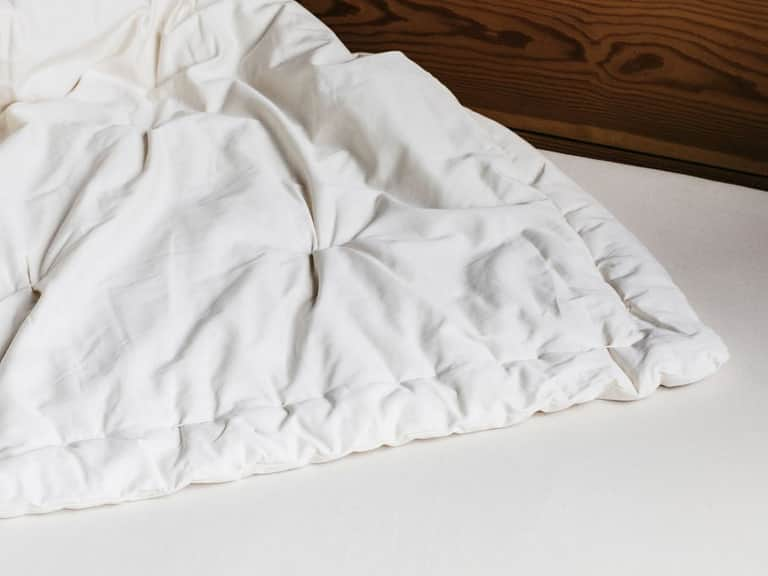
Quilting and stitching do more than decorate a comforter. They help keep batting distributed across its surface, limiting the movement of fill into empty areas or bulky clumps. Hand-tufting, perimeter stitching, and stitched patterns are among the construction details found in wool bedding. The particular method varies by product.
When comparing options, look for information about how the wool is held in place and whether the comforter includes corner ties for a duvet cover. A comforter that shifts inside its cover can bunch at one end, making its warmth feel uneven. Ties help reduce that movement, though the fit of the cover and the way it is secured also matter.
Shell fabric is another part of the equation. Cotton sateen, for example, has a smooth surface and is used in several wool comforter designs. Material names alone do not tell the whole story: fabric weight, weave, and finishing can affect breathability and handfeel. Check the full material description rather than assuming that every cotton shell behaves alike.
Labels such as “organic” and “certified” refer to particular standards and supply-chain requirements, not a guarantee that every person will sleep better. If certification is important to you, verify which component is certified and by what standard. A certification for the cotton shell, for example, does not automatically establish the sourcing or processing of every other material in a product.
Seasonal care: protect first, clean gently
Wool bedding often benefits from a care routine that emphasizes prevention and airing rather than frequent washing. A duvet cover can help protect a comforter, while regular airing may freshen bedding between changes of cover. Follow the maker’s instructions about sunlight and exposure: recommendations differ by product, and not every item should be treated the same way.
Spot cleaning is often suggested for small marks, but the method and acceptable moisture level vary. Some wool comforters can be washed only with a limited soak-and-spin process; others should not be washed at home at all. A label that permits machine washing may still prohibit a conventional wash cycle, wringing, or machine drying. Read the care instructions before a spill occurs, when there is time to choose the appropriate method.
For the All-Natural Dual-Weight Comforter, the listed directions are to spot clean as needed and, if machine washing is necessary, use cold water with soak and spin cycles only. The instructions say not to use the wash cycle, wring, or machine dry, and to drape the comforter in the sun or a warm place to dry. Those details are specific to that product and should not be treated as general instructions for every wool comforter.
Before storing a comforter for a warm season, make sure it is completely dry. Store it in a clean, dry place protected from pests, and avoid compressing it for long periods if the maker advises against doing so. Check the product’s care label for suitable storage guidance. Dampness and poor ventilation can undermine even careful maintenance.
A simple decision path
Choosing a weight becomes easier when the decision is broken into steps. Start with the conditions in the bedroom, then account for personal preference and the flexibility the household needs.
- Identify the main use. Is the comforter for a consistently warm room, a cool bedroom, or a home with large seasonal swings?
- Choose a starting warmth level. Consider lightweight construction if you regularly overheat or want a layer for warmer weather. Consider a medium or adaptable system if the room becomes cold for part of the year.
- Check the actual specifications. Compare fill amount, materials, dimensions, quilting, and care instructions. Treat category names as broad guidance, not universal measurements.
- Account for other sleepers. A dual-weight design may make sense when two people share a bed but prefer different warmth levels.
- Plan for the transition. Decide whether you would rather add a blanket, separate layers, or change comforters as the weather shifts.
There is no single weight that fits every sleeper or every season. The most useful choice is the one that fits the temperature range you actually experience, the way you sleep, and the maintenance you are prepared to provide. Where product descriptions leave important questions unanswered, ask the manufacturer or retailer for clarification rather than relying on a vague label.
Frequently asked questions
Is a heavier wool comforter always warmer?
Not necessarily. More fill can add insulation, but warmth also depends on fiber, quilting, shell fabric, coverage, the room, and other bedding layers. Compare detailed specifications when available, and consider how you personally respond to warmth.
Can one wool comforter work all year?
It can for some people and homes, particularly when the room temperature stays fairly stable. A room with wide seasonal changes or sleepers with different preferences may call for a lighter option in warm weather, an added blanket in winter, or a design with separable layers.
Does “washable” mean a wool comforter can go through a regular wash cycle?
No. The word does not replace the care label. Some products allow cold, gentle machine washing; others specify limited soak-and-spin cycles or advise against washing. Follow the instructions for the exact comforter, including directions about drying.
How can a duvet cover affect comforter weight?
A cover protects the comforter and changes the feel of the bedding. Its fabric and construction add another layer, so a thick or dense cover may feel different from a lighter one. Covers can also reduce the need to clean the comforter itself as often.
What is the advantage of a dual-weight comforter?
A dual-weight design has different warmth levels on its two sides, which can help people sharing a bed accommodate different temperature preferences. It does not change the bedroom temperature, but it offers separate warmth zones within one comforter.
The right warmth is a moving target
Seasonal comfort is not a fixed number printed on a tag. It is a relationship between the sleeper, the room, the bedding layers, and the material beneath them. Wool’s ability to insulate while managing moisture makes it an appealing option for many households, but weight and construction determine how that potential is put to use.
Lightweight comforters can suit warmer rooms and sleepers who prefer less insulation. All-season designs may offer a middle ground, while separable or dual-weight constructions provide more ways to adjust. Comparing fill information, care requirements, shell materials, and room conditions can turn those broad labels into a more informed decision—and help keep changing weather from deciding the night’s comfort for you.